Vehicle Donation Scenarios: Can You Donate in Your Situation?
At Vehicles For Veterans, we receive questions every day from people wondering if their specific situation qualifies for vehicle donation. While every donation is unique, understanding common scenarios can help you determine if you're ready to donate your vehicle to support American veterans charities.
The most important requirement for any vehicle donation is simple: you must have the title in your name. Without proper legal ownership documentation, we cannot accept your vehicle. This protects both you and our organization while ensuring all proceeds legally benefit veterans charities.
Let's explore common donation scenarios to help you understand if you can donate in your situation.
Donating a Vehicle You Inherited
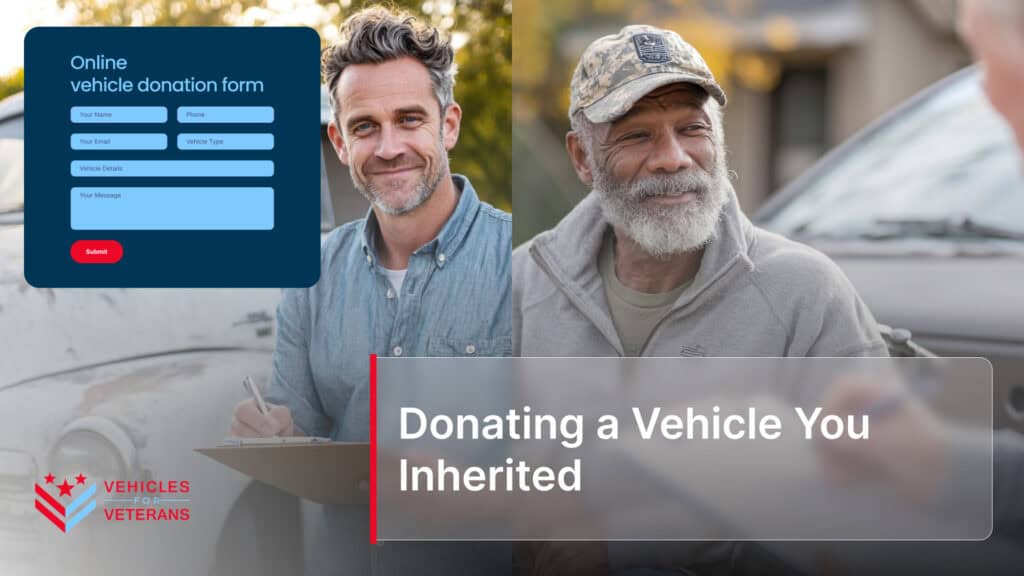
If you inherited a vehicle from a deceased family member, you can donate it—but only after completing the proper legal transfer process. The vehicle title must be transferred into your name through your state's probate or inheritance procedures before we can accept the donation.
What You Need to Do: Contact your state's Department of Motor Vehicles to transfer the inherited vehicle's title into your name. This typically requires a death certificate, proof of inheritance (will or probate documents), and completing title transfer paperwork. Once the title is in your name, you can proceed with donation. Visit our complete car donation guide.
We understand this is a sensitive time, and we're here to help once the legal ownership is established. Many families choose to donate inherited vehicles they don't need as a meaningful way to honor their loved one's memory while supporting veterans.
Donating on Behalf of a Deceased Family Member
Some families ask if they can donate a vehicle "in memory of" or "on behalf of" a deceased relative. While this is a beautiful sentiment, the legal requirements remain the same: the person making the donation must have the title in their name.
If you want to donate in memory of someone, first transfer the title into your name through inheritance procedures, then proceed with the donation. You can certainly let us know the donation is made in memory of your loved one, but legally, you'll be the donor of record.
Donating a Vehicle with a Loan or Lien
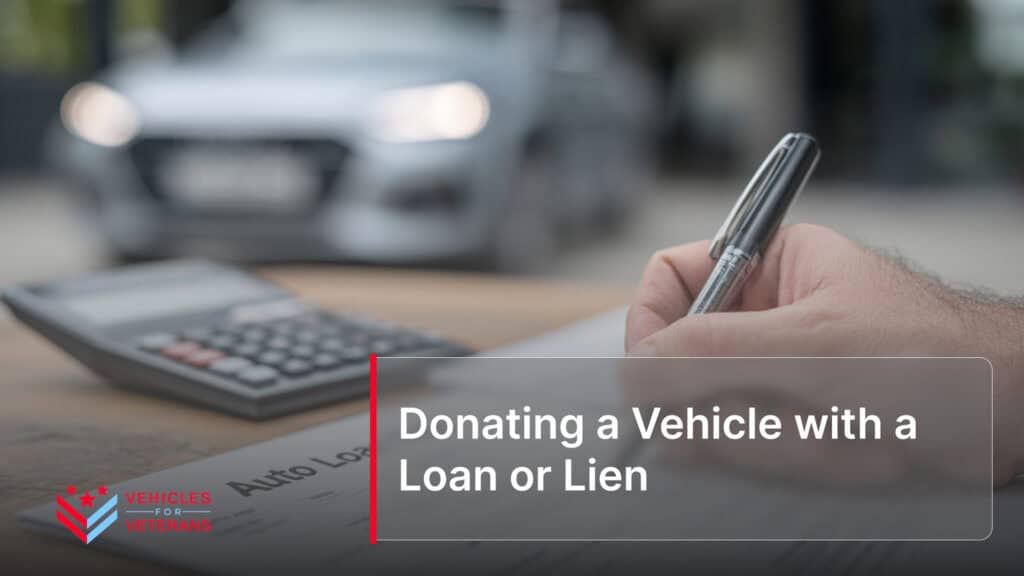
If your vehicle still has an outstanding loan or lien, the situation becomes more complex. The lienholder (typically a bank or finance company) technically owns the vehicle until the loan is paid off, which means you don't have a clear title.
In most cases, we cannot accept vehicles with outstanding loans. However, if the vehicle's value exceeds the loan amount and you're willing to pay off the remaining balance after sale, some scenarios may work. Contact us to discuss your specific situation, but generally, you'll need to pay off the loan and obtain a clear title before donation.
Donating a Vehicle Registered in Your Business Name
Business owners often have vehicles registered under their company name. You can donate business vehicles, but the title must be in your business name, and the business entity must complete the donation paperwork.
Business vehicle donations may offer additional tax advantages. Consult with your tax advisor about how business vehicle donations affect your corporate taxes. We'll provide the necessary documentation for your business records.
Donating a Vehicle Co-Owned with a Spouse
If you and your spouse are both listed on the vehicle title, donation is straightforward. Both owners will need to sign the title transfer paperwork. If only one spouse is listed on the title, only that person needs to complete the donation process.
In community property states, rules may vary regarding spousal consent for donations. Contact us if you have questions about your specific state's requirements.
Donating a Vehicle You're Still Driving
You don't need to stop using your vehicle before donation. Many donors continue driving their vehicles right up until pickup day. Just let us know when you'd like to schedule pickup, and we'll arrange a convenient time.
This scenario works well for people who have already purchased a replacement vehicle but want to maximize their use of the old vehicle before donation.
Donating Multiple Vehicles
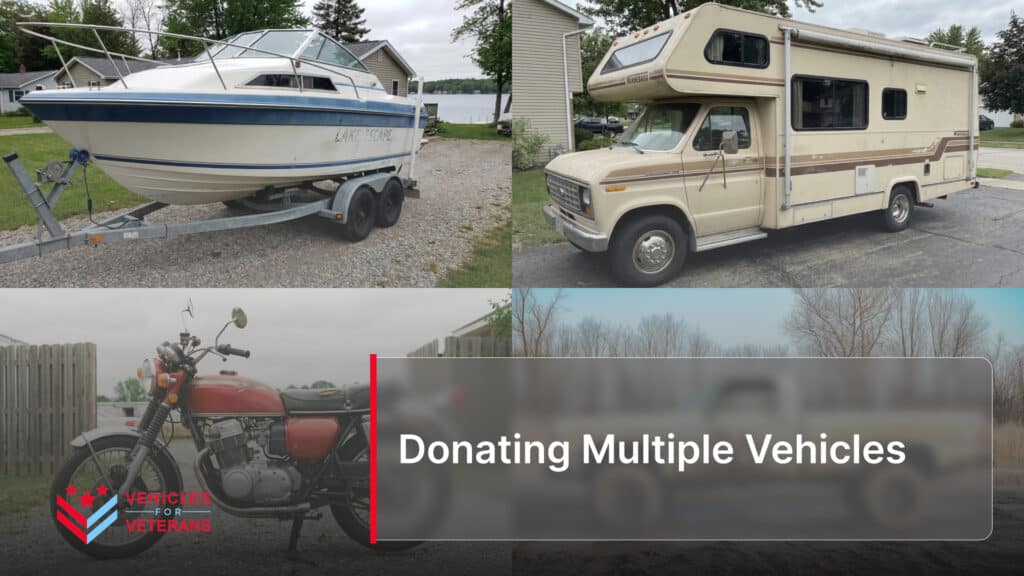
If you have several vehicles to donate—perhaps you're downsizing, clearing out a collection, or handling an estate—we can accept multiple donations. Each vehicle needs its own title in your name, but we can coordinate a single pickup for multiple vehicles when possible. Check if your vehicle qualifies for donation.
Fleet donations from businesses are also welcome. Contact us to discuss logistics for donating multiple commercial vehicles.
Donating a Vehicle That Doesn't Run
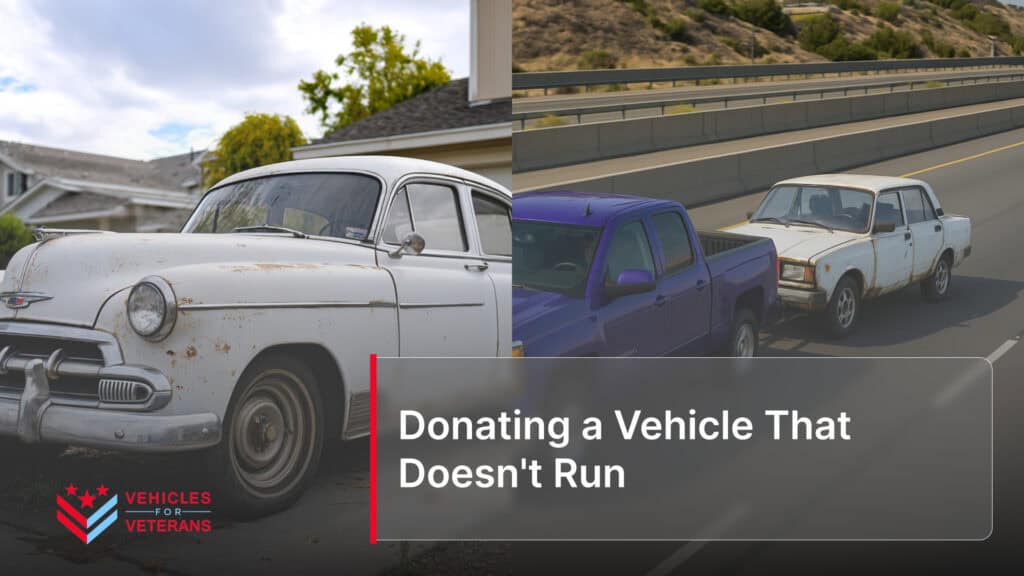
We accept non-running vehicles regularly. Whether your car has mechanical failure, accident damage, or simply won't start, we can still accept it if you have the title. We provide free towing for non-running vehicles, so you don't need to worry about transportation.
The donation process for non-running vehicles is identical to running vehicles. Just let us know the vehicle's condition when you contact us.
Donating a Classic or Antique Vehicle
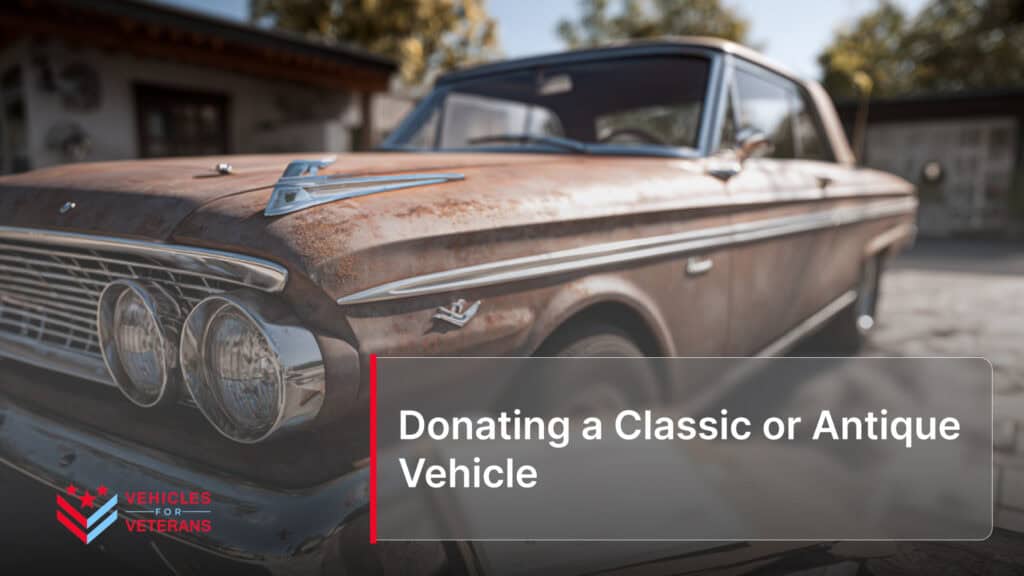
Classic cars, antique vehicles, and collector cars are all acceptable donations if you have the title. These vehicles may have significant value, which means a larger tax deduction and more proceeds for veterans charities.
If your classic vehicle has special documentation (authentication certificates, restoration records), keep copies for your records, though they're not required for donation.
Scenarios We Cannot Accept
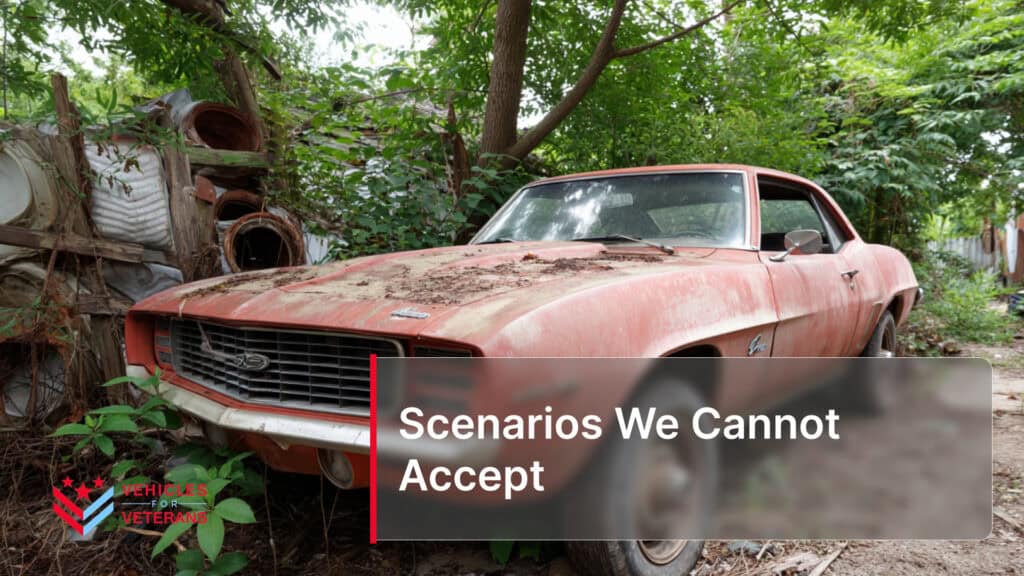
It's equally important to understand situations where we cannot accept vehicle donations:
Abandoned Vehicles on Your Property We cannot accept vehicles abandoned by others on your property, even if they've been there for years. You must be the legal title holder. Abandoned vehicles require legal abandonment procedures through local authorities before you could obtain title.
Vehicles Without Titles If you've lost your title, contact your state's DMV to obtain a duplicate title before donation. We cannot process donations without proper title documentation.
Vehicles Titled in Someone Else's Name Even if you have permission from the owner, we cannot accept vehicles unless the title is in your name. The titled owner must either donate the vehicle themselves or transfer the title to you first.
Stolen or Salvage Titles Vehicles with stolen vehicle histories or certain salvage titles may not be acceptable. Contact us to discuss specific situations.
Questions About Your Scenario?
Every donation situation is unique. If you're unsure whether your specific circumstances allow for donation, contact us. We're happy to discuss your situation and explain what steps, if any, you'd need to take before donation.
The key factor in nearly every scenario is the same: you must have the vehicle title in your name. With that legal documentation in place, most donation scenarios are straightforward.
Ready to donate your vehicle to support American veterans? Contact Vehicles For Veterans at 1-855-811-4838 or complete our online donation form today. We'll help you determine if your situation qualifies and guide you through the simple donation process.
Your vehicle donation supports veterans charities nationwide, funding healthcare, housing, mental health services, job training, and family support for those who served our country.