Car donation comes with its own vocabulary. From titles and liens to Form 1098-C and gross proceeds, the terminology can slow down an otherwise simple process. This glossary breaks down every term you are likely to encounter when donating a vehicle to Vehicles For Veterans, in plain language, with links to deeper resources where they […]
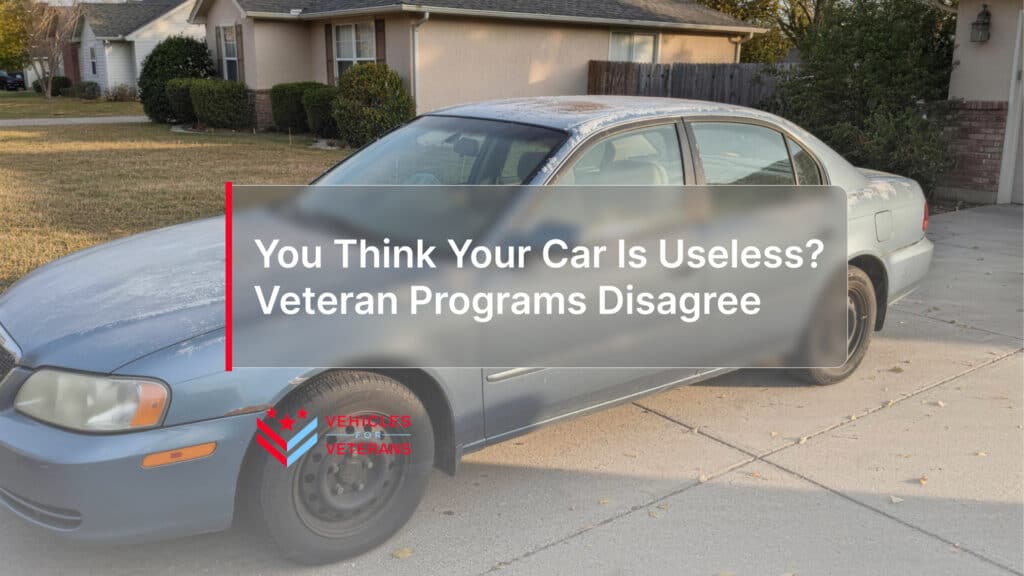
You Think Your Car Is Useless? Veteran Programs Disagree
That 2005 sedan with 195,000 miles sitting in your driveway? The one with the transmission slipping, the headliner sagging, and the rust creeping up from the wheel wells?
You've probably convinced yourself it's worthless. Maybe you've thought about calling a junkyard to see if they'll even take it off your hands.
Here's what you might not realize: that car you consider useless could generate hundreds or even thousands of dollars for American veterans charity programs. What looks like junk to you represents real funding for housing assistance, mental health services, adaptive equipment, and support programs that veterans desperately need.
The gap between what you think your car is worth and what it can actually do for veterans is bigger than you imagine.
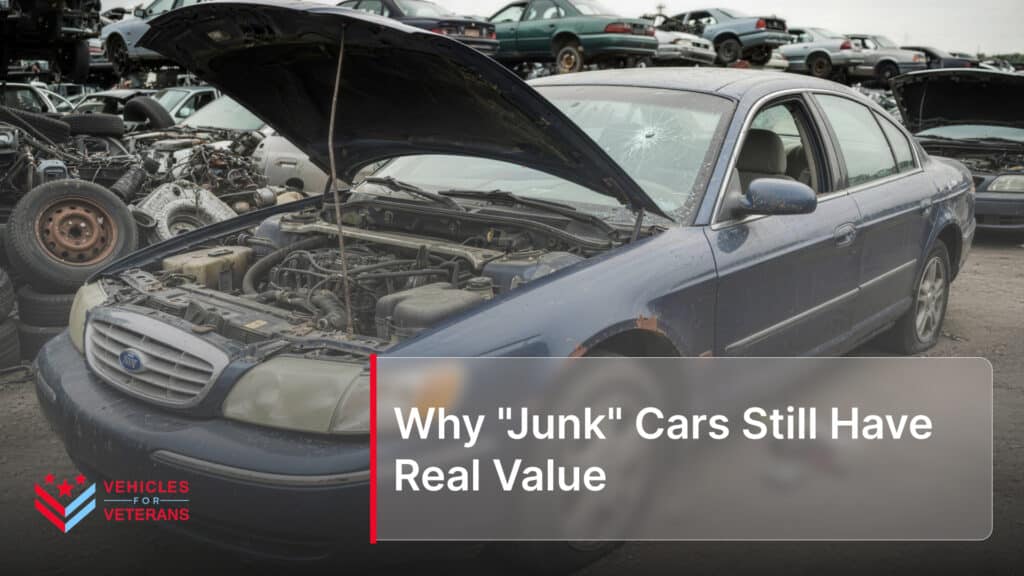
Why "Junk" Cars Still Have Real Value
Vehicle donation operates in a different world than private sales or dealer trade-ins. When you're trying to sell a high-mileage car with mechanical problems, you're competing against newer, more reliable options.
Buyers want something they can drive off the lot with confidence. Dealers only want cars they can easily resell.
But in the vehicle donation space, your old car enters a completely different market. At auction, buyers are looking for parts vehicles, repair projects, and cars they can fix and flip.
That engine you think is shot? Someone wants those components. Those body panels with surface rust? They're fine for a parts car. The interior that's seen better days? Not relevant when a buyer is after the transmission or electronics.
Even if your car is truly beyond repair, it still has value through recycling. The metal alone—steel, aluminum, copper wiring—generates proceeds. The catalytic converter contains precious metals. Tires, batteries, fluids—all of these get processed and have value in recycling markets.
At Vehicles For Veterans, we've processed donations of cars with over 200,000 miles, vehicles that haven't run in years, cars with significant body damage, and automobiles with mechanical problems that would cost more to fix than the car is worth. We evaluate each vehicle on a case-by-case basis to determine the best way to maximize value, whether that's through auction or recycling programs.
The key is knowing which channels to use and how to position your vehicle to generate the best possible proceeds for veterans charity programs. That's where our experience matters—we're not trying to retail your car to an individual buyer. We're connecting it with the buyers and recyclers who see value you might not recognize.
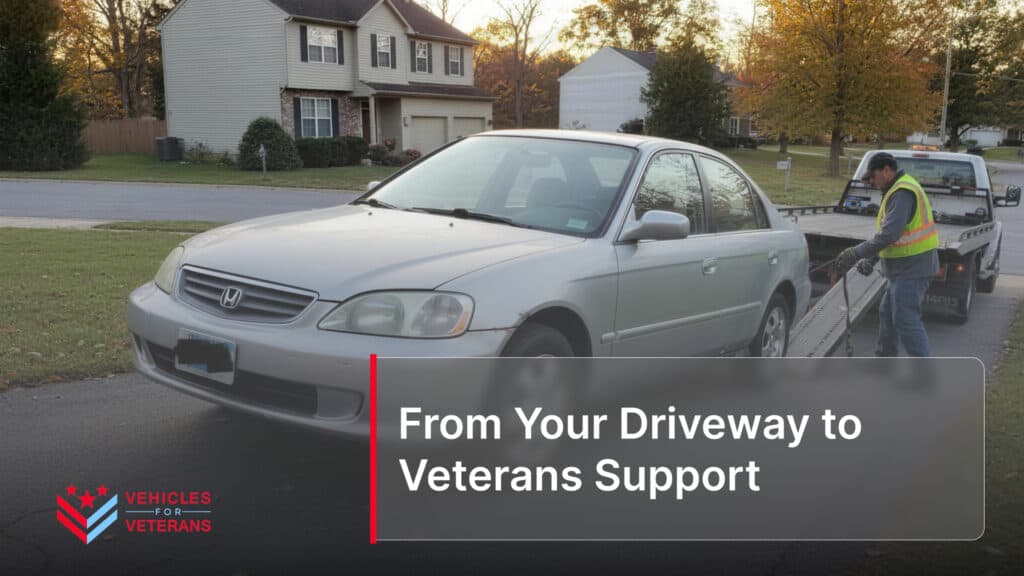
From Your Driveway to Veterans Support
Understanding how your old car translates into support for American veterans helps clarify why even rough-condition vehicles matter:
When you donate your car to Vehicles For Veterans, we schedule free pickup from your location. Our towing partners handle cars that don't run, have flat tires, or need to be loaded onto a flatbed. You don't need to get it running or make it presentable.
After pickup, we assess the vehicle and determine whether auction or recycling will generate better proceeds. High-mileage sedans with mechanical issues often go to auction where parts buyers compete for them. Non-running vehicles might go to recycling if that generates better value. Cars with body damage but working engines could go either way depending on current market conditions.
The proceeds from your vehicle—whether it sells for $300 or $3,000—go to benefit American veterans charity programs. That money funds housing assistance for veterans facing homelessness, adaptive equipment for veterans with disabilities, mental health services for those dealing with PTSD and other service-related conditions, service dogs that help veterans manage daily life, medical care and transportation to appointments, and employment support to help veterans transition to civilian careers.
Your "useless" car becomes flexible funding that veterans charities can direct where it's needed most. And you receive documentation showing exactly what your vehicle generated, supporting your tax deduction while confirming the real impact of your donation.
The Reality of Old Car Value
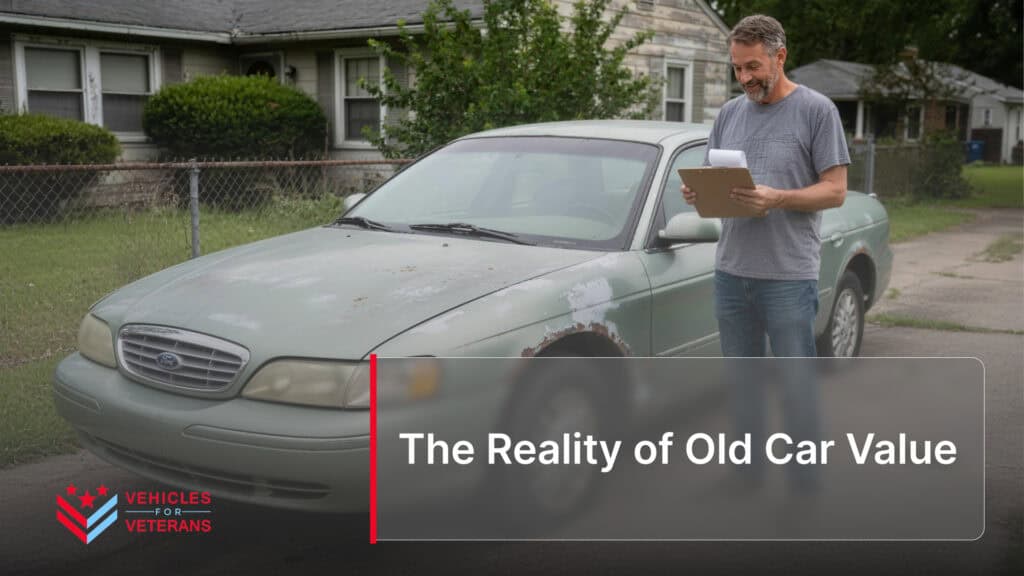
Let's be specific about what "old" and "rough condition" vehicles can actually generate:
A 15-year-old sedan with 180,000 miles, minor body damage, and a check engine light might generate $500-$1,200 at auction to a parts buyer or repair shop.
A 20-year-old SUV that doesn't run but has a decent body could bring $400-$800 through recycling, more if certain components are still valuable.
A high-mileage truck with rust and mechanical issues might surprise you by generating $600-$1,500 because trucks and truck parts maintain value longer than many sedans.
Even cars you'd assume are complete junk—major body damage, seized engines, significant rust—can generate $200-$500 through recycling programs.
These aren't huge amounts individually, but they represent real funding for veterans programs. And when you consider you're also earning a tax deduction, avoiding disposal fees, and eliminating ongoing insurance and registration costs, the math works strongly in favor of donation over paying someone to haul your car away.
Donate Your Vehicle in Three Easy Steps
Ready to turn that old car into support for American veterans?
Step One: Call us at 1-855-811-4838 or complete our online donation form. Tell us about your vehicle—we accept most cars in most conditions, evaluated case-by-case. We are here to answer your car donation questions.
Step Two: Schedule free pickup at your convenience. Our towing partners come to you and handle all transportation, even for non-running vehicles.
Step Three: Receive your tax documentation showing the final proceeds from your vehicle. Know that your donation is funding crucial programs for veterans and their families.
That car you think is useless? It's not. Contact Vehicles For Veterans today and see what it can do for those who served our country.
Frequently Asked Questions
Will you really accept my car if it doesn't run?
Yes. We accept non-running vehicles on a case-by-case basis. As long as we can arrange pickup and the vehicle has value through auction or recycling, we can process your donation. Non-running cars are extremely common in our program.
How do you determine what my old car is worth?
We send your vehicle through auction or recycling depending on which will generate better proceeds. The final sale or recycling value determines your tax deduction—you receive documentation showing the actual amount your donation generated.
Do I need to have the title to donate an old car?
In most cases, yes. The title proves ownership and allows us to process the vehicle legally. If you've lost your title, we can help you understand your state's process for obtaining a replacement. Some states have alternative documentation options for older vehicles.
What if my car has been sitting for years and has multiple problems?
That's fine. We regularly process vehicles that have been sitting unused for years. Even if your car has multiple mechanical issues, flat tires, dead battery, or other problems, we evaluate it to see if we can generate proceeds for veterans programs.
How long does the donation process take?
From your initial contact to pickup typically takes one to two weeks, depending on your location and schedule. After pickup, processing through auction or recycling takes additional time. You'll receive your tax documentation after your vehicle is sold or recycled, usually within a few weeks of pickup.
Can I donate a car that failed inspection or has expired registration?
Yes. Failed inspections and expired registration don't prevent donation. We're not putting your car back on the road for personal use—we're processing it through auction or recycling. These issues don't affect our ability to accept your vehicle on a case-by-case basis.
Related Posts
A Real Donor Was Offered $45,000 for This RV. Tree Damage Changed Everything. Here's What Vehicles For Veterans Got at Auction.
Read More
This is a real story. A veteran with nearly 30 years of service came to us with a 2015 Winnebago Via that had taken $5,500 in tree damage to the roof. A year earlier, the largest retailer of RVs in the U.S. had offered them $45,000 for it. After the damage, they weren't sure what […]
Donate a Work Truck, Van, or Commercial Vehicle to Support Veteran Charities
Read More
That retired work van sitting in your lot still has value — and donating it to Vehicles For Veterans puts that value to work for American veterans charity programs. Call or fill out our online donation form to get started today. Commercial vehicles — box trucks, cargo vans, work pickups, utility trucks, and service vehicles […]
Historic Korean War Military Truck Begins One Last Mission Supporting America's Veterans
Read More
A truck that served America during the Korean War is back on duty. This time, it's supporting the veterans charity programs that serve those who have worn the uniform. If this piece of living history can do its part for veterans, so can your unwanted vehicle. Call or donate online today and put your car […]